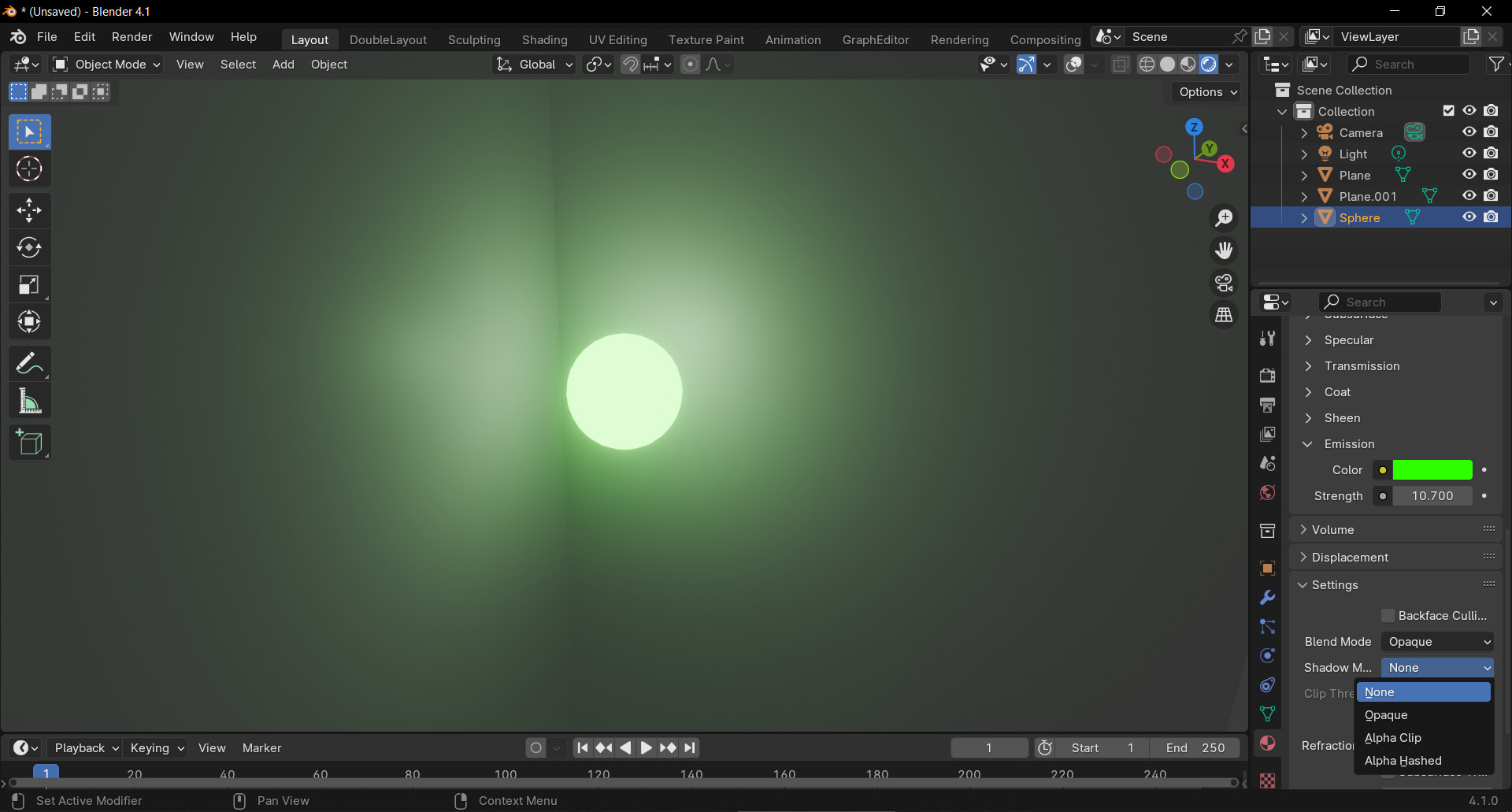
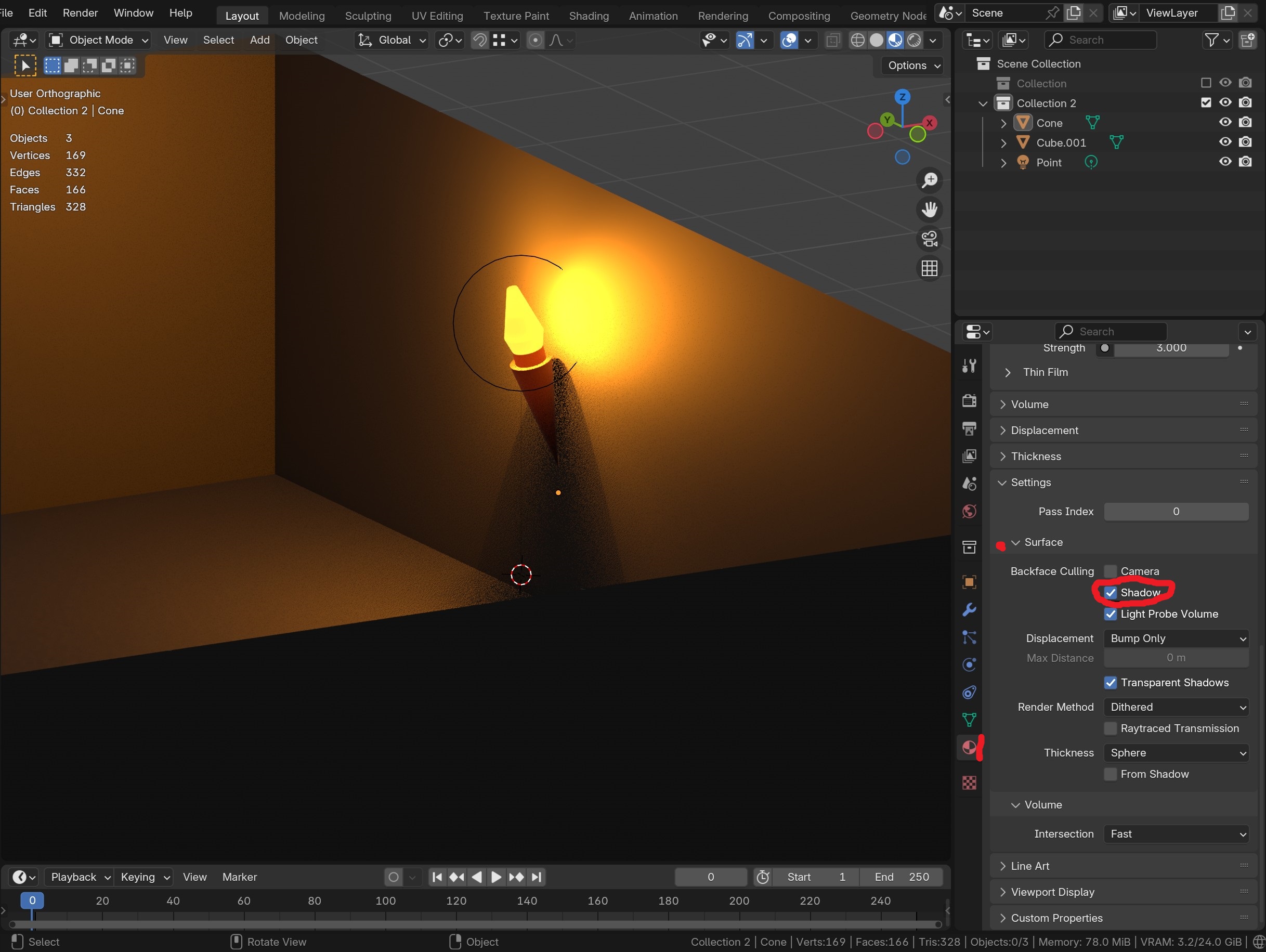
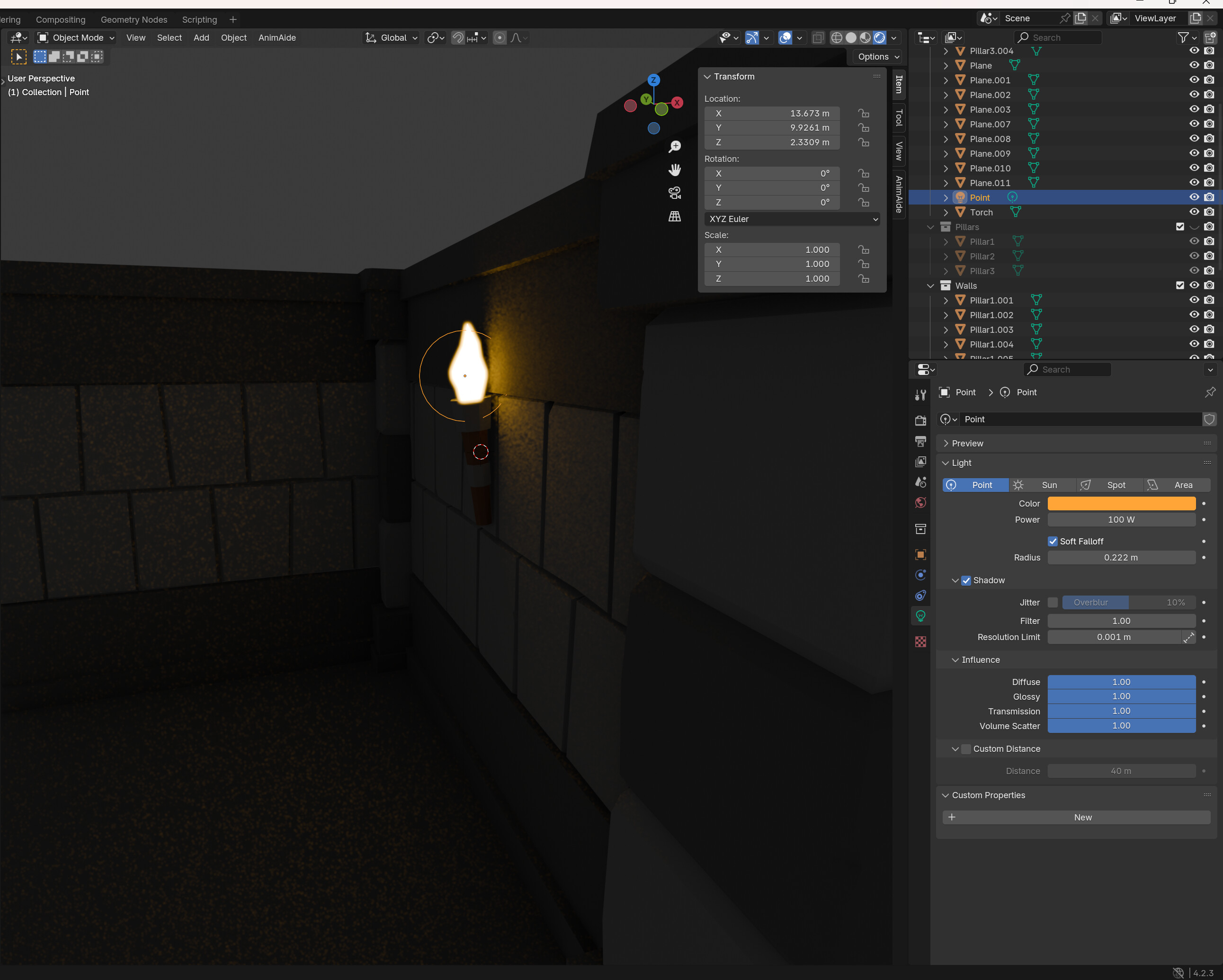
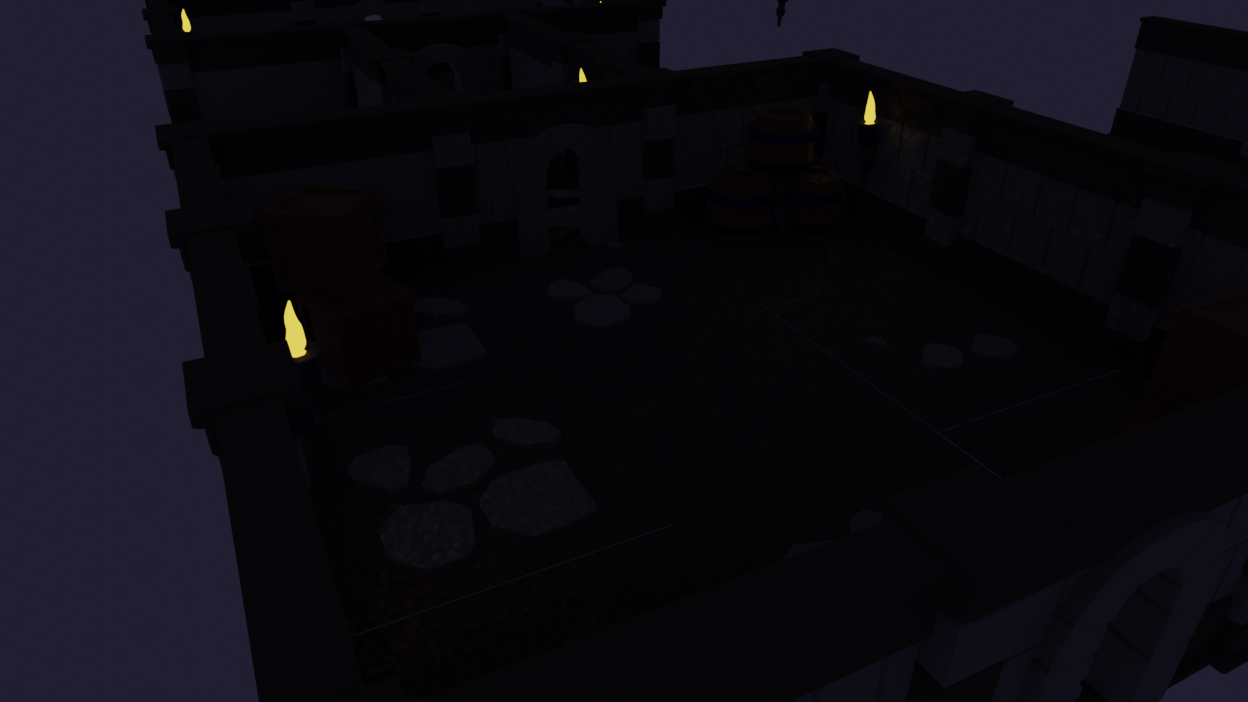
I am taking the course Learn 3D Modelling for Beginners, lecture 2.16 at about 5:26. Grant has a point light inside of his torch which, when sized appropriately, shines lights into the surrounding area. I’ve got a point light set up identically to his, sized up and with a bright enough power, and yet my light does not light the surrounding area as long as the origin is inside of the torch. No matter how bright or how big I make the light, as long as the origin point is inside the torch I can’t get any light from it until I move the origin outside of the torch.
Edit: It appears to work in Cycles, however Grant’s tutorial is using Eevee, which is what I’m using.
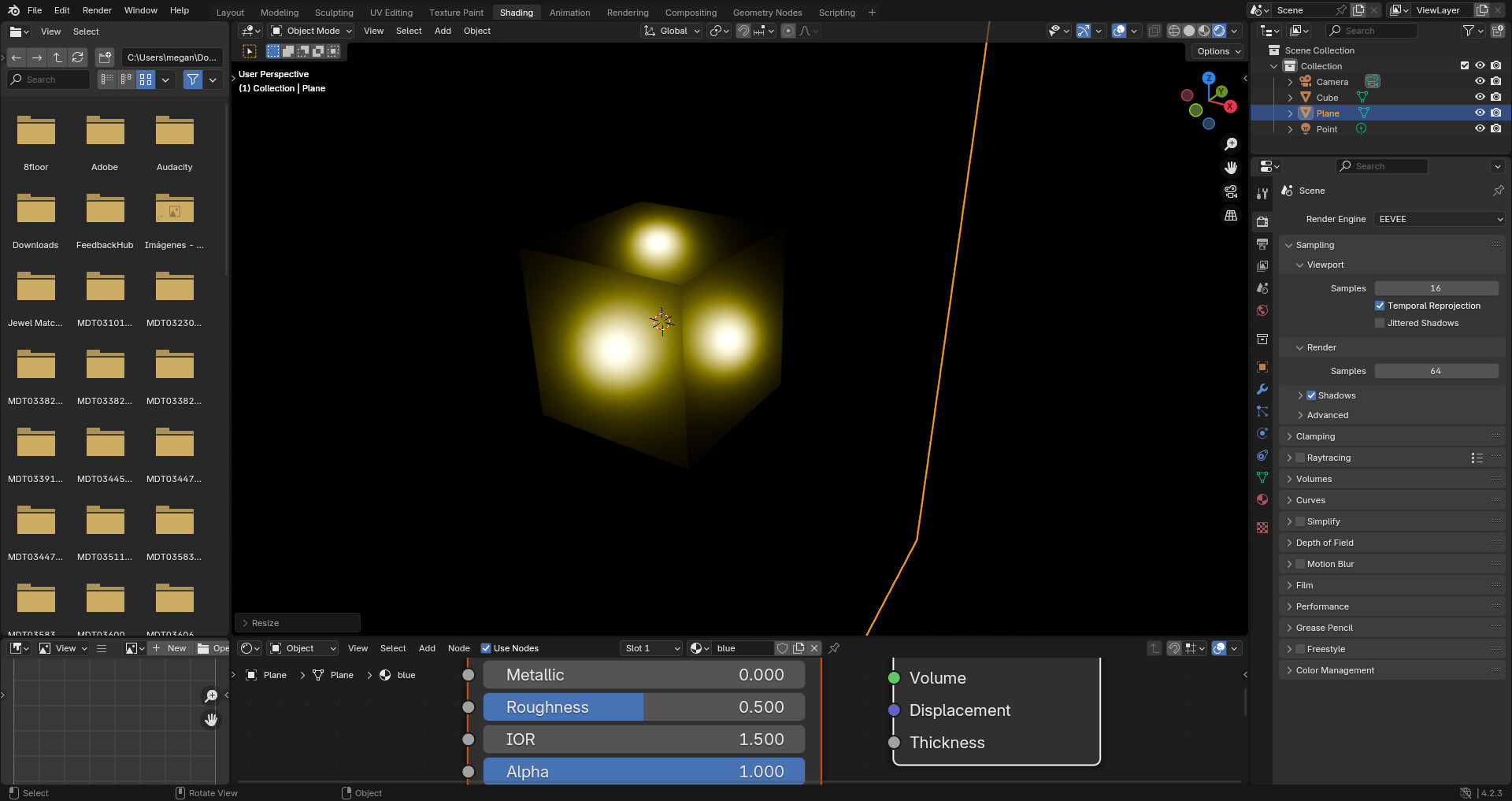
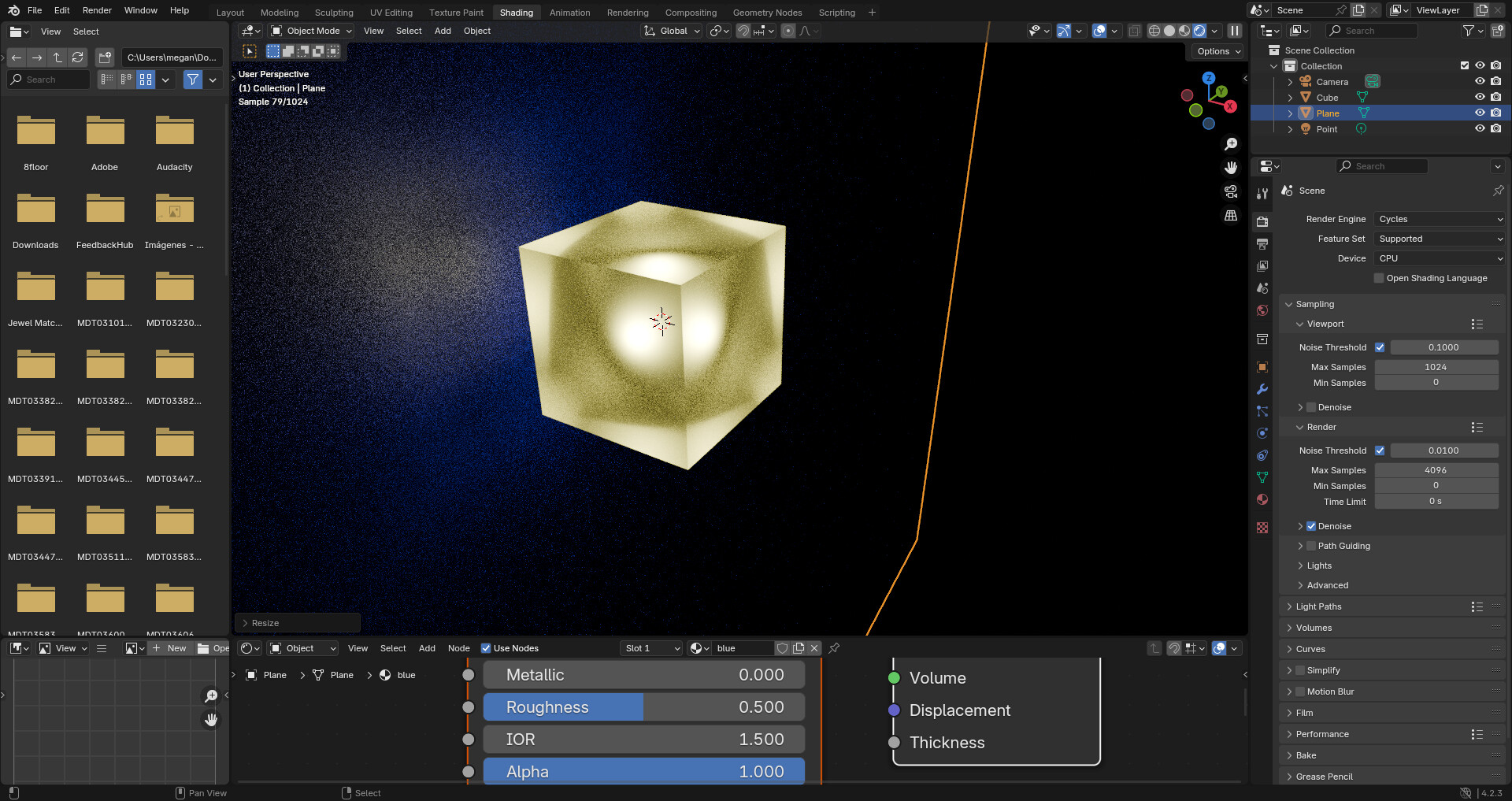
Yes, I was about to confirm you this. If you use evee and don’t add anything else, you see the emitting material but it does not emit any light rays that are used outside the material. In order to see that light you have placed inside, you have to use cycles. If there is even a bit of the point light outside the torch, you can see a convincing light around the torch; that’s usually enough for this exercise.
Thank you for the response and the examples. I am still confused, though, why the tutorial shows it working in Eevee. Has there been some change in how lighting works in Eevee since 3.2 (when the tutorial was recorded) which now makes what we see Grant doing impossible in 4.2?
The tutorial as I followed it just a few months ago was for Blender 3.4. Maybe they have updated it in part for version 4 but not everything?
Overall, cycles uses detailed ray tracing to deal with transparent materials, diffuse materials, dispersion, complex reflections, and so on, while Evee only shows something that can be convincing but is not the same. Even the glare effect you add through Compositing is only an addition that suggests a nice glow but is applied to the finished render, so it is not taken into account as “light” during render (therefore, even though you can use it to get a beautiful glow in some cases, for example, it does not deal with the corresponding obstacles and shadows , because it is “painted” on the final image).



 , because it is “painted” on the final image).