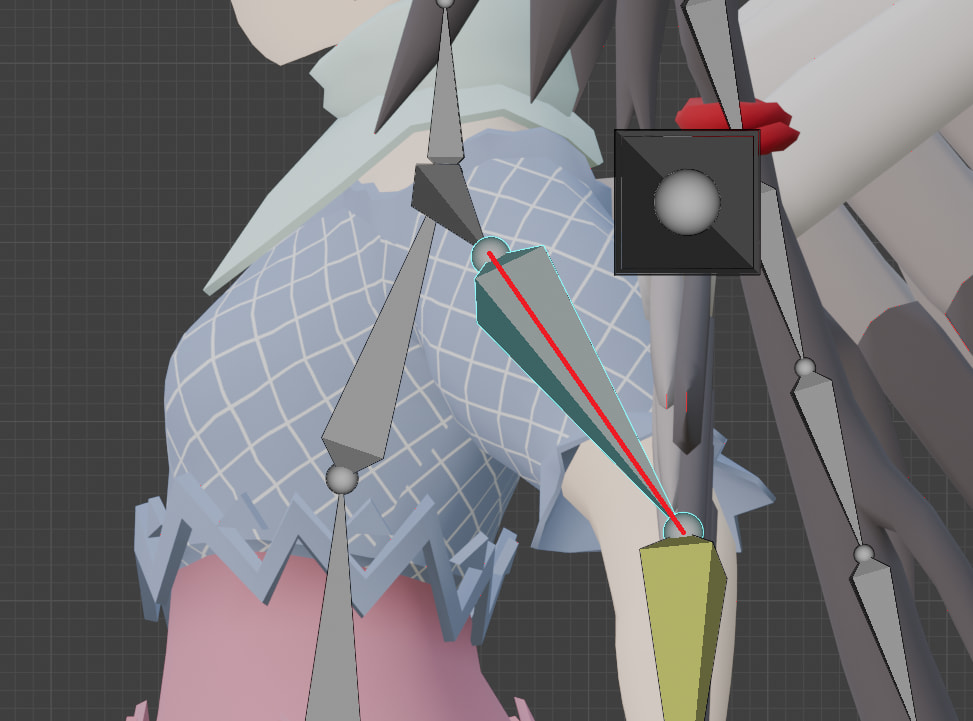
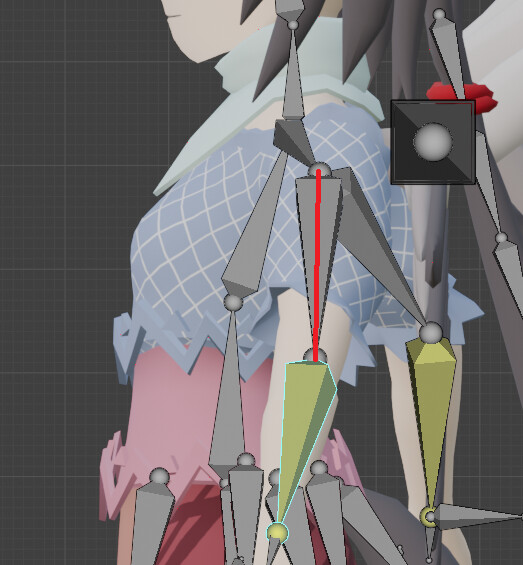
Why are the arms pulled back in the default pose? From what I can tell, this is supposed to be an A-pose, which is a standard pose for rigging. But from what I’ve seen online, an A-pose usually has the arms at the sides, not pulled back.
When posing/animating, I’ve had a lot of issues with the upper arm twisting/collapsing at the shoulder when moving the arms in front of the character (e.g. throw a punch, or just reach out to grab something). There are ways to mitigate this (twist correction bones, shape keys, etc), but it occurred to me that just having a more neutral default pose would help.
The first image shows the default pose consistent with the course. The second image shows a more neutral pose (arms to the sides, not back). This is a 30 degree rotation relative to the default pose, which means the arm has to rotate an extra 30 degrees to get to the front of the character, worsening issues with twisting.
The only benefit I can see to the first pose is that it moves the arms out of the way of the body in sideview, to make modeling easier. But for animating, it seems much worse.
You’ve probly edited the bones in rest pose, or something like that.
I’m not sure I follow. But I’ll add a bit more context to clarify the issue.
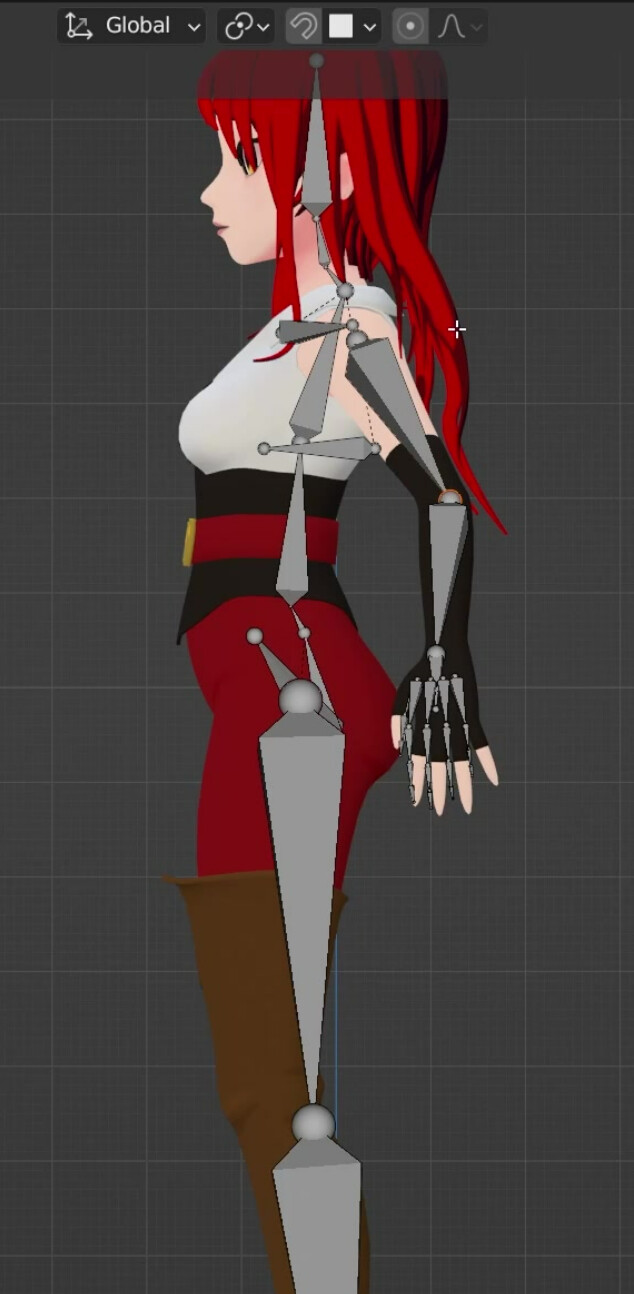
This is a screenshot from the course of the rigged character in the default pose:
The arms are rotated back by 30 degrees relative to the vertical axis. I’m wondering why this choice was made. My character uses this same default pose for the arms. I’ve found that it exacerbates deformation issues, because the arm has to rotate 90+ degrees to get in front of the character.
The other pose I showed is a hypothetical more neutral pose, closer to what I see in online references to A-poses. If used as a default pose, it would reduce the amount of rotation required by 30 degrees compared to the pose used in the course.
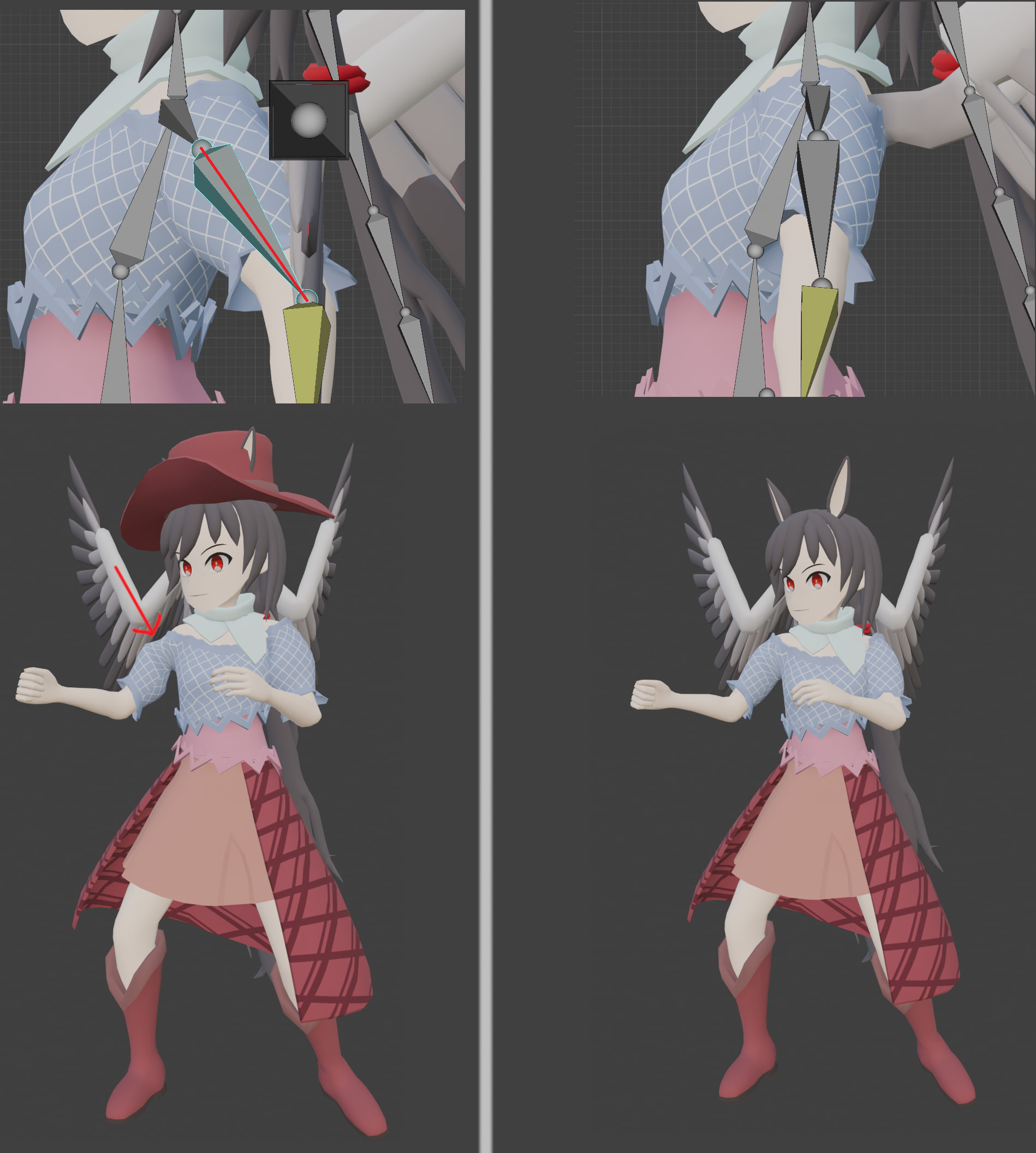
Final thoughts on the matter - I’ve applied the new default pose, cleaned up the mesh in that pose, and tried animating: sure enough, it made things a lot easier.
Top Left: The original default pose, the way it’s done in the course.
Bottom Left: A pose with the arm facing forward - the amount of rotation in the right upper arm relative to the default pose causes it to twist and pinch noticeably.
Top Right: The new default pose, with the arm straight out instead of back.
Bottom Right: The same-ish pose as bottom left, but now the arm doesn’t need to rotate as much relative to the default pose. So the pinching is gone.